
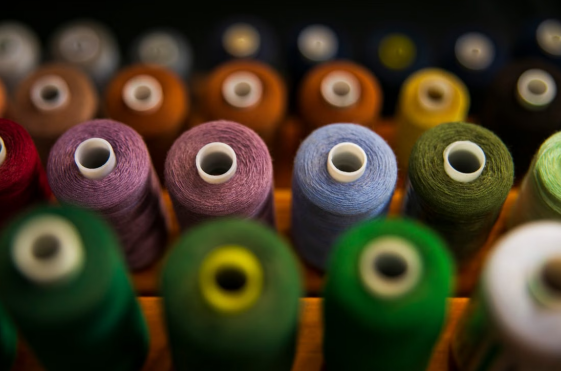
Storing embroidery thread spools the right way protects color, strength, and stitch quality long before that thread ever loads back onto a machine, and an open spool left sitting for a few weeks rarely performs the same as one straight out of the box.
We treat this as part of routine shop upkeep, not an afterthought, since a spool that frays or fades between jobs can throw off a design as easily as a rushed setup can. It’s one more habit that keeps every job coming through our order page finishing the way it started.
Keep Dust and Light Off Every Open Spool
Dust is the quiet cause behind a lot of thread problems that get blamed on the machine instead. Per Ricoma’s guide to storing embroidery thread, closed drawers or boxes with tight-fitting lids keep dust off spools far better than an open shelf, and that alone cuts down on the lint that later clogs a hook or bobbin case.
Direct sunlight causes the same kind of slow damage, fading color and making fiber brittle over time. We keep our open stock away from windows and bright shop lighting, since even indirect exposure adds up across weeks of storage.
Hold Humidity and Temperature Steady
Thread reacts to its environment more than most people expect. Per Coats’ thread storage guidance, keeping humidity between 40 and 60 percent and temperature between roughly 50 and 77 degrees Fahrenheit protects fiber strength and prevents mildew from forming on natural fibers.
We avoid storing thread near a boiler, heater, or loading dock door for exactly this reason, since those spots swing in temperature and humidity throughout the day in ways a back shelf doesn’t.
Secure the Loose End Before It Unravels
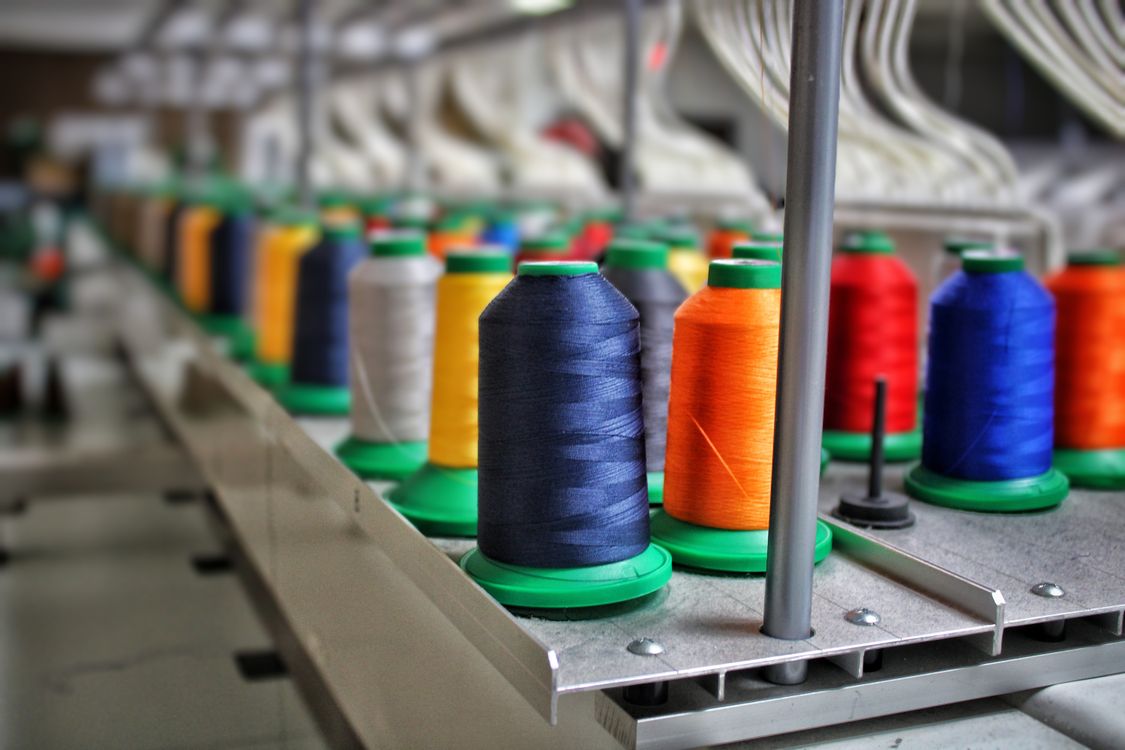
An open spool with a loose tail is an invitation to tangle the moment it touches another spool on the same shelf. A simple loop of netting or a plastic tie wrapped around the spool keeps that end secure between jobs, and it takes seconds to apply once a color comes off the machine.
We rotate older open spools to the front of the shelf so they get used before a fresher one, instead of letting a partial spool sit untouched for months while newer stock gets grabbed first.
Pick a Storage Layout That Matches How Often You Reach for It
Vertical racks keep colors visible and easy to grab, which works well for shades we run through every week. Closed drawers or bins take a little longer to search through, but they add another layer of dust and light protection that an open rack simply can’t match.
We keep our fastest-moving colors on open racks near the machines and shift slower-moving specialty spools into closed bins, since a thread we only pull out once a month benefits far more from the extra protection than one that’s back in use within days.
Good Storage Habits Protect Every Job Down the Line
Thread shelf life depends more on storage than most shops assume, and humidity-controlled storage paired with basic dust and light protection prevents most of the fraying and fading we’d otherwise chase later. A steady spool rotation routine rounds out the habit and keeps older stock from going to waste on the shelf.
None of this replaces starting with quality thread and a properly digitized file in the first place, since good stitching still depends on both. Contact us at Affordable Digitizing if you want a second set of eyes on a file before your next production run.